
The Supreme Court has questioned the National Highways Authority of India (NHAI) on the lack of electronic surveillance to track stationary vehicles on highways, citing a recent fatal accident. The court is hearing a suo motu case related to road safety and has previously issued directions against unauthorised parking and commercial structures on highways.

The Supreme Court has upheld the Bombay High Court's decision to quash the Yes Bank administrator's write-off of Rs 8,415 crore worth of Additional Tier 1 (AT-1) bonds, criticising the RBI and Yes Bank's conduct.

The Supreme Court has stayed the execution of a man sentenced to death for the repeated sexual assault of three minor girls. The apex court's decision comes after the Madras High Court confirmed his conviction and death penalty. The Supreme Court has sought reports from probation officers, jail authorities, and a psychological evaluation of the appellant, posting the matter for hearing after 20 weeks.
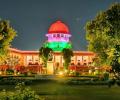
The Supreme Court has directed the Tamil Nadu government to comply with its previous order to identify land for establishing Navodaya Vidyalayas in each district of the state, emphasising cooperative federalism and urging a change in mindset regarding the central government's education policy.

The Supreme Court declined to hear a plea from the producer of Vijay's 'Jana Nayagan' regarding censor board clearance, directing them to the Madras High Court. The case involves delays in certification and political undertones in the film.
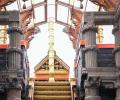
The Supreme Court observed that Hinduism is a way of life, stating that mandatory temple visits or rituals are not necessary to be considered a Hindu; even lighting a lamp at home suffices.

The Supreme Court of India has dismissed the use of information from 'WhatsApp University' as evidence in a case concerning religious freedom and discrimination against women at religious sites, including the Sabarimala Temple.

The Centre has supported the restriction on women of menstruating age entering Kerala's Sabarimala temple, arguing that the Supreme Court's 2018 judgement assumes male superiority.

The Supreme Court of India has emphasised that a husband's obligation to maintain his wife is a primary and continuing duty, ensuring she lives with dignity and in a manner commensurate with her marital status.

"It is a policy matter. You ask Parliament to enact the law," a bench of Justices B R Gavai and Augustine George Masih told the counsel appearing for the petitioner.
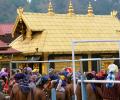
The Supreme Court is hearing petitions related to discrimination against women at religious places, including the Sabarimala temple. A nine-judge bench is examining the scope of religious freedom and the exclusion of women based on age and menstrual status.
The Supreme Court of India has stated that religious institutions must have structure and norms for their functioning, emphasising that the right to manage a religious institution does not imply an absence of order.
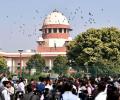
The Supreme Court on Monday agreed to hear a plea of Ashoka University's political science department head Ali Khan Mahmudabad challenging his arrest for social media posts related to Operation Sindoor.

The Supreme Court has clarified that a decree passed only against a real estate developer cannot be enforced against its directors or promoters in their personal capacity unless the original adjudication clearly finds them liable.
The Supreme Court of India has observed that the practice of excommunicating Parsi women for entering into interfaith marriages is prima facie discriminatory, emphasising that the right of conscience is a birthright.
ISKCON Bangalore had moved the top court on June 2, 2011 challenging the high court's verdict of May 23, 2011.
The Travancore Devaswom Board (TDB), managing the Sabarimala temple, argued in the Supreme Court that religious beliefs should be judged subjectively by the community, as the court hears petitions related to discrimination against women at religious places.

A nine-judge Supreme Court bench has reserved its order on petitions related to discrimination against women at religious places, including the Sabarimala temple, and the scope of religious freedom.
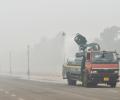
On November 18, the apex court directed all Delhi-NCR states to immediately set up teams to strictly enforce anti-pollution GRAP 4 restrictions, making it clear that the curbs would continue till further orders.

The Supreme Court has quashed criminal proceedings against the in-laws of a woman who alleged dowry-related harassment, citing a lack of specific evidence linking them to the alleged crimes.

The Supreme Court of India has voiced concerns about the potential consequences of individuals questioning religious practices in constitutional courts, warning it could lead to the fragmentation of religions and civilisation. A nine-judge Constitution bench is hearing petitions related to discrimination against women at religious places and the scope of religious freedom.
The Shabari story in the Ramayana found mention before a nine-judge constitution bench of the Supreme Court on Wednesday while hearing petitions related to discrimination against women at religious places, including the Sabarimala temple in Kerala.
The Supreme Court of India is hearing petitions related to discrimination against women at religious places, including the Sabarimala temple in Kerala, and the scope of religious freedom practised by multiple faiths.
A bench comprising Chief Justice B R Gavai and Justices Augustine George Masih and AS Chandurkar also directed that the offending video be immediately taken down and restrained the YouTube channel from republishing it or similar content.
A bench of Justices Abhay S Oka and Augustine George Masih therefore directed the Delhi police commissioner to immediately inform all the stakeholders concerned about the ban order and ensure no sale and manufacture of crackers.
Delhi high court Chief Justice Satish Chandra Sharma, Rajasthan high court Chief Justice Augustine George Masih and Gauhati high court Chief Justice Sandeep Mehta were appointed as top court judges.
The Supreme Court of India has asserted its jurisdiction to determine what constitutes a superstitious practice within a religion, during a hearing on petitions related to discrimination against women at religious sites.
A nine-judge Supreme Court bench has commenced hearing on petitions related to discrimination against women at religious places, including the Sabarimala temple, and the scope of religious freedom across faiths.

The Supreme Court of India dismissed a plea seeking the inclusion of Vinayak Damodar Savarkar's name in the Emblems and Names (Prevention of Improper Use) Act, 1950. The petitioner, appearing in person, argued for the inclusion based on his 30 years of research and claimed a need to establish facts about Savarkar in a legally verifiable manner. However, the court found no violation of fundamental rights and suggested the petitioner make a representation to the Union of India for curriculum inclusion. This dismissal follows the court's earlier reprimand of Congress leader Rahul Gandhi for his remarks on Savarkar at a rally in Maharashtra, although criminal proceedings against Gandhi were stayed.
The Supreme Court of India granted bail to an accused in a cheating case being investigated by the Central Bureau of Investigation (CBI), criticizing the Allahabad High Court for adjourning the bail hearing 27 times. The Supreme Court deemed the repeated adjournments in a matter related to personal liberty unacceptable and issued a notice to the CBI.
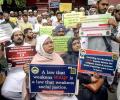
A bench comprising Chief Justice B R Gavai and Justice Augustine George Masih asked senior advocate Kapil Sibal, appearing for those challenging the validity of the law, and Solicitor General Tushar Mehta, representing the Centre, to file their written notes by Monday.
The Supreme Court of India questioned the Centre regarding the eligibility of non-devotees to challenge the customs of the Sabarimala temple in Kerala, during a hearing on religious freedom and discrimination against women at religious sites.

The Supreme Court questioned the chief priest of the Sabarimala Ayyappa Temple regarding the constitutionality of preventing believers from touching the deity, during hearings on discrimination against women at religious sites.
The Supreme Court has stated that roads cannot be blocked for religious activities and that while religious denominations have autonomy in worship, the government can interfere if secular activities are affected.

The Supreme Court has taken suo motu cognisance of the controversy surrounding the definition of Aravalli hills and is scheduled to hear the matter. The court had previously accepted a uniform definition and banned fresh mining leases in the area.

The Centre has informed the Supreme Court that the restriction on women of menstruating age entering Kerala's Sabarimala temple is a matter of religious faith and denominational autonomy, falling outside the purview of judicial review. Solicitor General Tushar Mehta argued that courts should not apply 'secular standards of reason' to religious practices.
The Centre has asked the Supreme Court to reconsider its judgements decriminalising adultery and same-sex relationships, arguing they were based on a subjective application of 'constitutional morality'.

The Supreme Court on Tuesday imposed a cost of Rs 50,000 on the Centre for filing an appeal against an order of the Armed Forces Tribunal, which granted a liberalised pension to the widow of a soldier who died during a counter-terrorism patrol in Jammu and Kashmir.

Issuing notice to the ED on the plea filed by the Tamil Nadu government and Tamil Nadu State Marketing Corporation (TASMAC), a bench comprising Chief Justice B R Gavai and Justice Augustine George Masih told Additional Solicitor General S V Raju, appearing for the anti-money laundering probe agency, that "Your ED is crossing all the limits."

The Supreme Court of India has emphasised the importance of open access to all temples and 'maths' for everyone, warning that excluding any denomination would negatively impact Hinduism and divide society. This statement was made during hearings on petitions related to discrimination against women at religious sites and the scope of religious freedom.
